今回も日本語ページは2枚目に載せています。
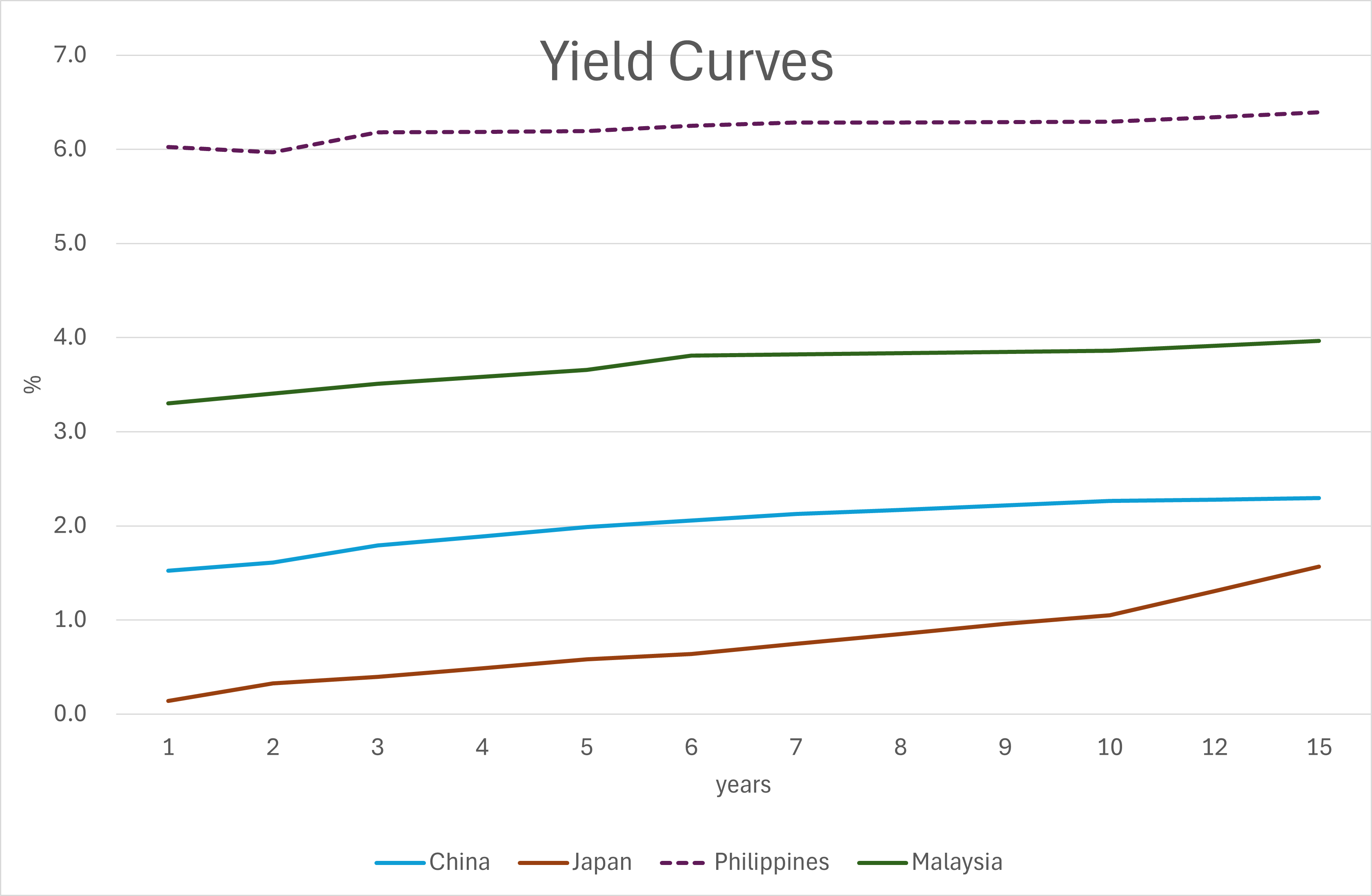
In the previous post, we observed the yield curves of countries with positive yield curves and those with convex curves in the mid-zone.
The difference in the shape of these yield curves appears to be due to whether the country has aggressively raised interest rates amid recent inflation or has been cautious about raising rates.
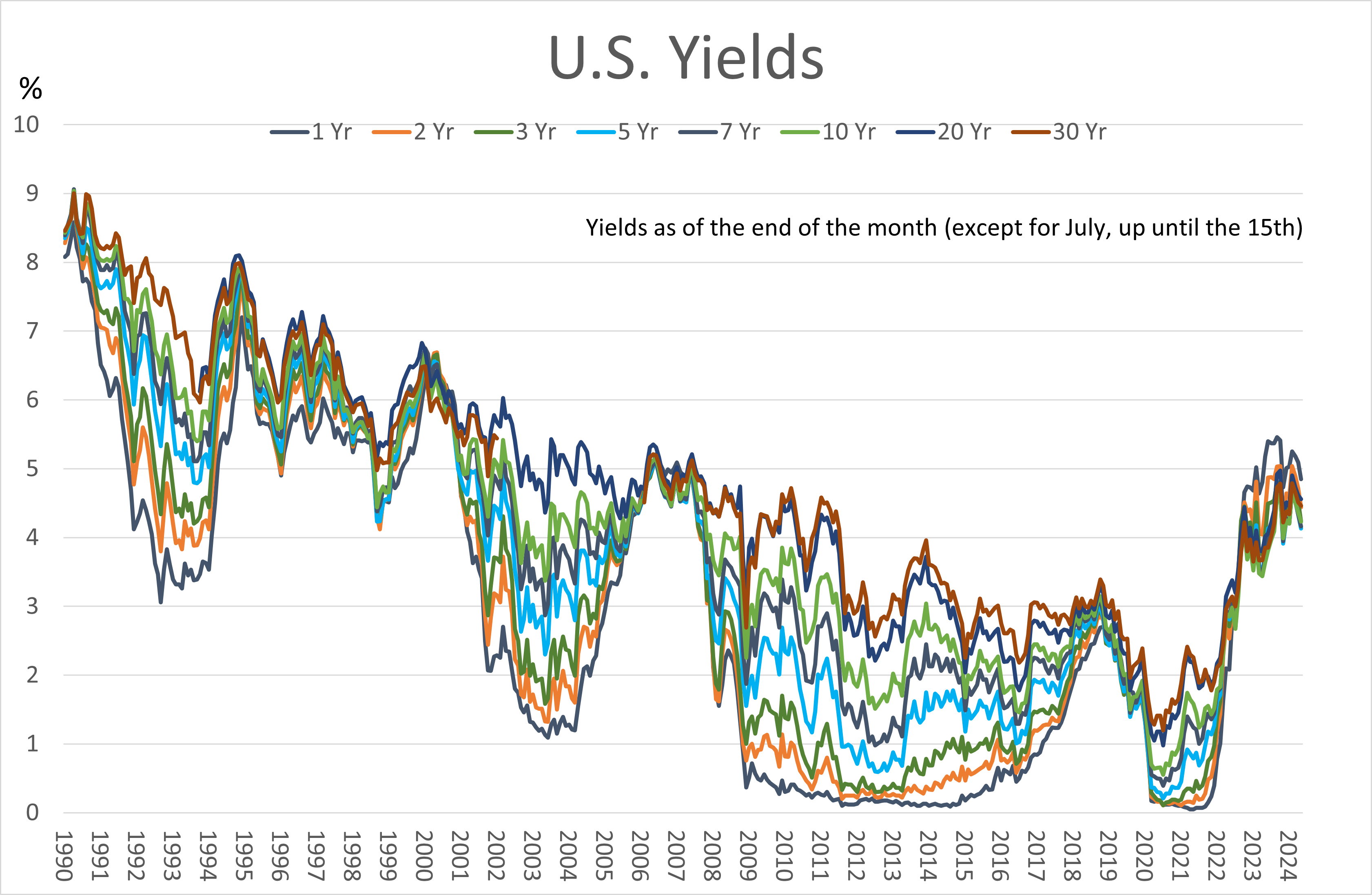
Let’s compare the United States, which has repeatedly raised rates aggressively, and Japan, which has been cautious about raising rates.
The yield curve compares interest rates at different maturities at a single point in time, but here we will look at the time series transition of interest rates for each maturity.
United States
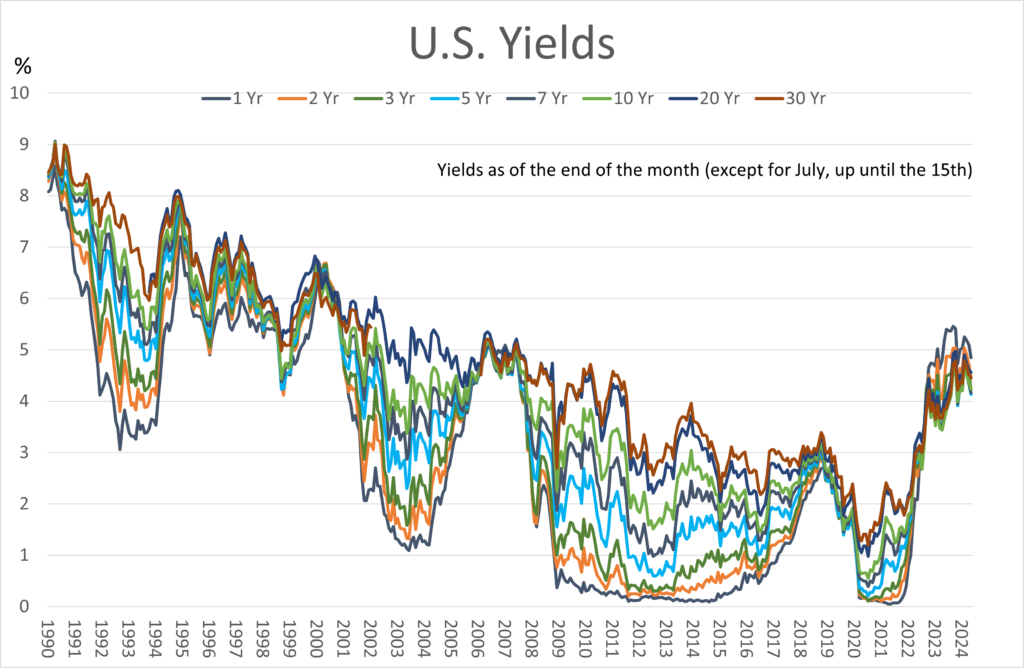
(Source) U.S. Department of the Treasury HP
Short-term interest rates are more influenced by the policy rate (FF rate). The Federal Reserve (FRB) implemented its first rate hike in March 2022. This was the first rate hike since 2018, raising the policy rate to a range of 0.25% to 0.50%. Since then, a series of rate hikes have been carried out to curb inflation, with sharp rate increases continuing especially from late 2022 to 2023.
As a result, short-term interest rates up to the mid-zone have become higher, and with persistent inflation expectations and economic growth prospects, the yield curve rises from the mid-zone to the long-term.
Japan
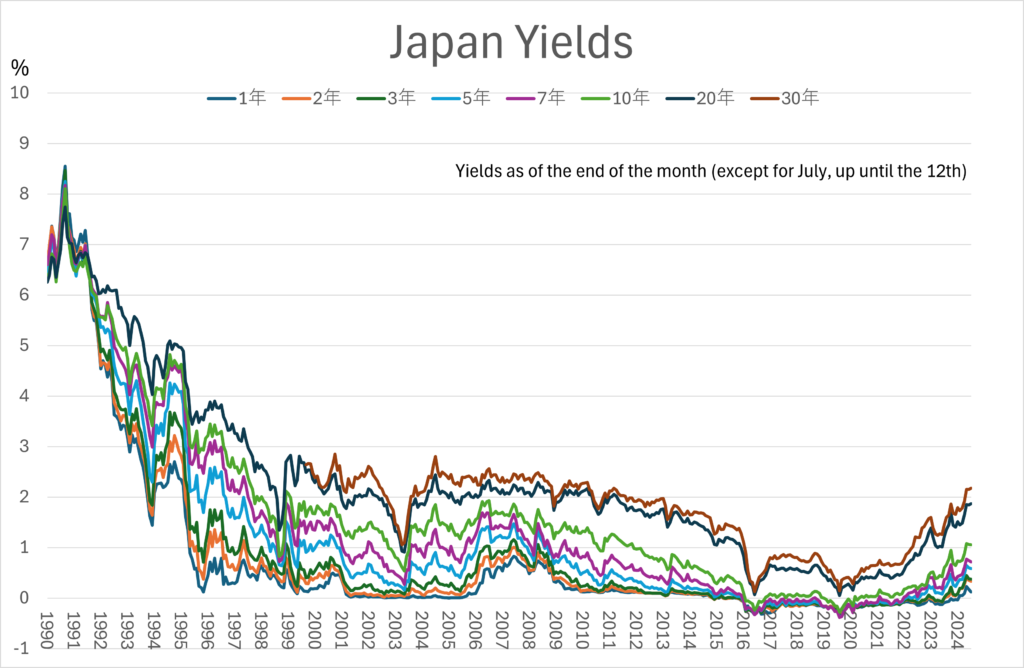
(Source) Ministry of Finance, JAPAN
Since the Bank of Japan governor changed in April 2023, Japan has been in the process of gradually expanding the allowable fluctuation range of the 10-year bond yield, aiming to phase out the side effects of unconventional monetary easing while being cautious of the consequences.
Important adjustments to enhance the flexibility of yield curve control were made in July and October 2023.
In July 2023, the Bank of Japan announced a flexible operation of the policy that allowed the yield on 10-year government bonds to fluctuate within a range of ±0.5%. This was a measure to ease the obligation to purchase large amounts of government bonds even if the yield exceeded 0.5%, depending on market demand.
Furthermore, on October 31, 2023, the Bank of Japan announced a policy to operate yield curve control even more flexibly, implementing measures to improve market functions and promote smoother interest rate formation.
Due to the increased flexibility of yield curve control, the yield curve, which had been artificially suppressed, has become steeper, with long-term interest rates rising.
Trends in Other Countries
In many Western countries, yield curves have become convex in the mid-zone due to the impact of rate hikes, while in many Asian countries, the yield curves are positive (with exceptions such as South Korea and Singapore).
Recent monetary policies in countries with positive yield curves tend to be cautious about rate hikes, resulting in smaller rate increases. In China, on the other hand, the People’s Bank of China has been easing monetary policy, such as reducing the reserve requirement ratio by 0.5% from February 5, 2024, and lowering the re-lending and re-discount rates by 0.25% from January 25, 2024.
\ 最新情報をチェック /